


Hub-Drive vs. Mid-Drive: How to Actually Choose an Electric Dirt Bike
- Category: Pics |
- 22 Sep, 2026 |
- Views: 330 |
Electric dirt bikes have crossed a threshold in the last two years. What used to be a compromise quieter, cleaner, but noticeably slower than a comparable gas machine now routinely hits 45 to 50 mph with instant torque delivery that a two-stroke simply can't match off the line. The technology caught up, prices came down, and a category that was niche in 2020 is now a legitimate first choice for trail riders.
But the buying decision has gotten harder rather than easier, because the specs that matter most are not the ones that appear in the headline. Peak wattage sells bikes. Motor placement determines whether you enjoy riding one.
The Decision That Actually Matters
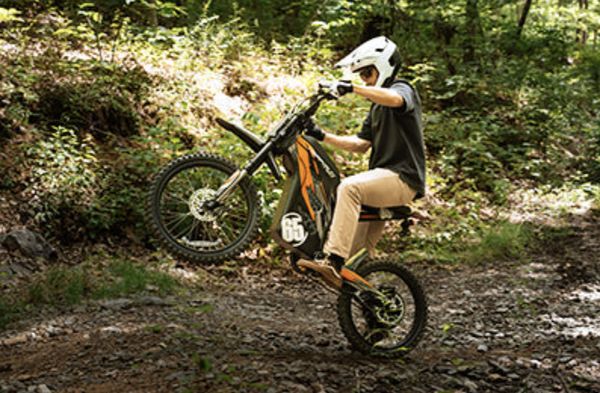
Every electric dirt bike puts its motor in one of two places, and this single choice shapes the entire riding experience.
Hub-drive motors sit inside the rear wheel. The design is mechanically simple, requires no chain or belt between motor and wheel, and delivers power directly where it's needed. Hub motors excel at sustained high speed on open terrain, fire roads, desert washes, and wide trails where you're holding throttle rather than constantly modulating it. The tradeoff is unsprung weight. Putting several kilograms of motor inside the wheel makes the suspension work harder to keep that wheel in contact with uneven ground, which you feel most on chattery, rocky sections.
Mid-drive motors mount at the frame's centre, driving the rear wheel through a chain. Centring that mass low and between the axles transforms how the bike handles at low speed; it feels balanced rather than rear-heavy, and throttle control on steep technical climbs is noticeably more precise. Mid-drives also multiply torque through the drivetrain, which is why they post higher effective torque figures than their raw wattage suggests.
The practical rule: if most of your riding is fast and open, hub-drive. If it's slow, steep, and technical, mid-drive.
Reading Torque Correctly
Torque figures on electric dirt bikes are frequently misunderstood, and comparing them across motor types without context produces the wrong conclusion.
Looking at HappyRun's current lineup illustrates this clearly. The hub-driven G300 Pro puts out 6500W peak with 120 N·m of torque, while the mid-drive F18 2.0 runs a lower 6000W peak but produces 245 N·m, more than double the torque from less peak power. That's not a contradiction. The mid-drive is multiplying torque through its gearing, which is exactly why it climbs better despite the lower wattage.
Peak wattage tells you about top-end speed potential. Torque tells you about acceleration and climbing ability. A rider who spends weekends on steep singletrack will be better served by the higher-torque, lower-wattage machine, and anyone shopping an adult electric dirt bike purely on the wattage number is optimising for the wrong variable.
Fit Is Not a Detail
Seat height gets treated as a spec-sheet footnote, and it should not be. The spread across a single manufacturer's lineup can be substantial. HappyRun's models range from 26.5 inches on the F18 2.0 up to 33.1 inches on the G18 Pro, a 6.6-inch difference that entirely changes who can ride each bike confidently.
That matters more on dirt than on pavement. Being able to plant a foot solidly when you stall on a climb, or dab through a rutted corner, is a genuine safety consideration rather than a comfort preference. A rider who has to tiptoe at a stop will ride more tentatively and crash more often.
Weight capacity varies too, and it's worth checking against your actual riding weight including gear. Boots, helmet, armour, and a hydration pack add real mass; the F18 2.0 supports up to 300 lb,s while the G300 Pro and G18 Pro both handle 350 lbs, and gear can easily consume 20 to 25 pounds of that headroom.
Measure your inseam before you shop. It narrows the field faster than any other single filter.
Range Numbers Need Discounting
Manufacturer range figures are measured under favourable conditions: moderate speed, flat terrain, light rider, mild temperature. Actual trail riding looks nothing like that.
HappyRun states this directly on its own product pages, noting that real-world trail riding typically delivers 25 to 35 per cent less than listed figures. That's an unusually honest disclosure, and it matches what most riders experience across the category. A bike rated for 75 miles realistically delivers 50 to 55 miles of aggressive trail use. One rated for 60 miles gives you around 40.
Plan around the discounted number, particularly for point-to-point rides where running flat means a long push rather than a short walk. Cold weather reduces it further, sometimes by another 20 per cent in near-freezing conditions.
The Legal Situation Is Simpler Than It Looks
Here's the part that trips up new buyers: most serious electric dirt bikes are not street legal, and they're not trying to be.
Class 3 e-bike regulations cap motor-assisted speed at 28 mph in most US jurisdictions. Any machine hitting 38, 46, or 50 mph is well outside that classification, which places it in the same regulatory category as a gas dirt bike legal on private land, closed tracks, and designated OHV areas, but requiring registration, licensing, and insurance for public road use where that's permitted at all.
This isn't a loophole to exploit. It's a straightforward category distinction, and treating an off-road machine as a commuter is how riders end up with citations and impounded bikes. Check your state's OHV regulations and local trail access rules before buying, not after.
Age restrictions vary by state as well, which matters if you're buying for a teenager. Lower-speed models in the 36 to 44 mph range are generally more appropriate for younger or newer riders regardless of what the law permits.
Safety Certification Is Worth Verifying
Battery safety has become the defining quality question in this category, driven by well-publicised fires involving uncertified imports.
UL 2849 is the relevant standard for electrical systems on e-bikes, covering the battery, charger, and controller as an integrated system rather than testing components in isolation. Certification by an accredited third party, such as TÜV Rheinland, being one of the recognised bodies, indicates the system has actually been tested rather than merely claimed compliant.
Look for named certification bodies and verifiable certificate numbers. "Meets UL standards" without independent testing means considerably less than an actual listing.
What Ownership Looks Like
The maintenance case for electric is genuinely strong. No oil changes, no air filter, no spark plug, no carburettor jetting for altitude, no top-end rebuilds. What remains is brake pads, tyres, chain maintenance on mid-drives, suspension service, and battery care.
Battery longevity depends mostly on charging habits. Avoid leaving the pack at full charge for extended storage, don't store it fully depleted, and keep it out of extreme heat. Most modern lithium packs hold reasonable capacity through several hundred cycles with sensible treatment.
Fast charging to 80 per cent typically takes 2.5 to 3 hours on bikes in this class, which makes a lunch-break top-up practical if you're riding somewhere with power access.
Making the Call
Work backwards from terrain. Fast open trails favour hub-drive and top speed. Technical climbing favours mid-drive and torque. Long days favour battery capacity over peak output.
Then check fit against your inseam and weight, discount the range figure by a third, confirm the certification is real, and verify where you're actually allowed to ride before the bike arrives. Those five checks eliminate most of the buyer's remorse in this category considerably more effectively than comparing peak wattage across spec sheets.