


The Strange Side of Modern Technology: Everyday Devices That Look Like They Came From the Future
- Category: Pics |
- 16 Sep, 2026 |
- Views: 867 |
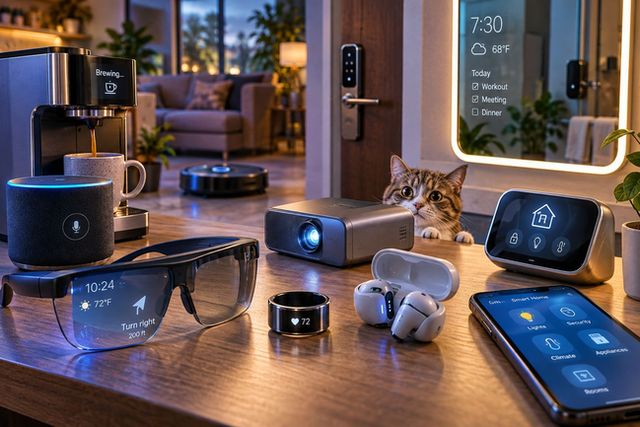
The Strange Side of Modern Technology: Everyday Devices That Look Like They Came From the Future
Technology often changes daily life without making a dramatic entrance. A household buys a new appliance, someone replaces an old phone, or an office installs a smarter access system. Within a few weeks, people treat the new device as ordinary. Yet many objects that now sit on kitchen counters, wrists, desks, and walls would have seemed highly unusual only a few decades ago.
This shift reaches far beyond work. People now use connected electronics for communication, health tracking, home security, cooking, transport, and entertainment. A person can control lights without touching a switch, ask a small speaker for information, or open afkspin casino from a handheld device while sitting at home. The same compact screen can handle banking, video calls, maps, games, photography, and dozens of other tasks. That concentration of functions explains why ordinary technology can sometimes feel surprisingly futuristic.
Smart Glasses Bring Information Into the Field of View
Smart glasses represent one of the clearest examples of science-fiction concepts entering everyday life. Engineers have worked for years on compact eyewear that can display digital information while allowing users to see the physical environment around them.
Current designs can handle tasks such as notifications, audio, photography, translation, directions, and voice commands. Some models place information directly within the user's field of view, while simpler versions focus on cameras, microphones, speakers, and wireless connections.
The technical challenge involves size. Designers need to fit processors, sensors, batteries, microphones, cameras, and communication hardware into a frame that people can wear comfortably. Heat and battery life also create practical limits.
Privacy creates another concern. A tiny camera can record without attracting much attention. Manufacturers and regulators therefore face questions about recording indicators, consent, storage, and acceptable use in public spaces.
Despite these issues, smart glasses show how computing may gradually move away from screens that users hold in their hands.
Rings Can Now Function as Computers
A ring once served mainly as decoration or a simple symbol. Electronics have changed that role.
Smart rings can contain sensors that monitor movement, skin temperature, heart rate, sleep patterns, and other physical signals. The ring transfers measurements to another device, where software organizes the information for the wearer.
The small dimensions make this technology particularly interesting. Engineers must fit sensors, wireless components, a battery, and other electronics into a structure that remains comfortable on a finger.
Many users also prefer the discreet format for sleep tracking because they do not need to wear a larger device on the wrist. The ring can collect data throughout the night without a bright display.
This category shows an important direction in consumer electronics. Computers do not always need keyboards or large screens. They can take forms that barely resemble traditional electronic equipment.
Mirrors Have Started Displaying More Than Reflections
A bathroom mirror can now show the time, weather, calendar information, household reminders, or health-related data.
Some smart mirrors use displays behind partially reflective glass. When the screen turns off, the object looks much like a standard mirror. When someone switches the system on, digital information appears across selected areas.
Other versions use cameras or sensors for fitness and wellness functions. A mirror can guide an exercise routine, display information while someone prepares for work, or connect with other equipment around the house.
This combination makes the object interesting because it adds computing functions without introducing another obvious screen into the room.
Smart mirrors also demonstrate how manufacturers can add digital features to objects that have remained mechanically simple for centuries.
Robot Vacuum Cleaners Create Maps of Homes
Early robotic vacuum cleaners followed fairly basic movement patterns. Modern versions can understand rooms with much greater precision.
They use combinations of cameras, distance sensors, lasers, and software to create maps. A household can often tell the machine to clean a specific room, avoid a certain area, or return to a charging station.
Some machines can also recognize obstacles such as furniture and cables. Advanced docks handle additional tasks, including emptying collected dirt or managing cleaning components.
Several technologies work together inside these systems:
• Distance sensors measure nearby surfaces.
• Mapping software records room layouts.
• Cameras help identify objects and obstacles.
• Motors adjust movement according to the surroundings.
• Wireless connections allow remote control through another device.
The result resembles a small autonomous machine rather than a traditional vacuum cleaner.
Door Locks No Longer Always Need Keys
Metal keys still work perfectly well, but many homes and buildings now use electronic alternatives.
Smart locks can accept numerical codes, wireless signals, fingerprints, or commands from connected devices. Some systems allow a homeowner to grant temporary access without handing over a physical key.
This approach changes a familiar routine. Instead of asking whether someone remembered the key, a household may check access through an app or enter a code.
Electronic locks can also record access events. That function helps people understand when someone entered or left a property. However, digital access creates its own security requirements. Owners need strong account protection, secure software, and a plan for battery failure.
The door itself looks ordinary. The method that controls it does not.
Kitchen Appliances Can Recognize Food and Monitor Cooking
Cooking equipment has gained sensors, cameras, wireless connections, and automated controls.
Some ovens can monitor internal temperatures and adjust cooking conditions. Connected thermometers send measurements to a phone or tablet. Certain refrigerators can track contents with internal cameras, while automated coffee machines can remember preparation settings.
These functions do not remove the human role from cooking. They mainly reduce the need to check equipment repeatedly.
Modern kitchens can now include devices that:
• Monitor cooking temperatures in real time.
• Send alerts when food reaches a selected temperature.
• Store frequently used settings.
• Control timers through voice commands.
• Display recipes on integrated screens.
• Track appliance status remotely.
A kitchen from the early 2000s and one from the mid-2020s may contain many objects with similar shapes, yet the electronics inside them differ substantially.
Portable Projectors Can Turn Walls Into Screens
Projectors once required large machines, cables, dedicated media players, and carefully controlled rooms. Compact models have changed that arrangement.
Some portable projectors fit inside a small bag. They can connect wirelessly to phones or computers, run media applications directly, and automatically correct the projected image.
Built-in batteries allow certain models to operate without constant access to a power outlet. Automatic focus removes another manual adjustment.
A plain wall can therefore become a temporary screen within minutes.
This technology also illustrates the shrinking size of electronic components. Functions that once required several separate devices can now fit into a single portable unit.
Earbuds Can Translate and Filter Sound
Wireless earbuds started as a straightforward alternative to wired headphones. Their role has expanded considerably.
Small microphones can analyze surrounding noise and reduce unwanted sound. Some systems adjust audio according to the environment. Others work with software that supports spoken-language translation.
The devices can also detect when a user speaks, accept voice commands, and switch between different listening modes.
These abilities require considerable processing despite the tiny physical space available. Each earbud needs power management, wireless communication, microphones, speakers, sensors, and control electronics.
Their appearance remains simple. Most people who see a pair on a desk would not immediately recognize how much computing occurs inside them.
Desks and Chairs Now Include Sensors
Office furniture has also entered the connected-device category.
Some desks can remember preferred heights and change position through electric motors. Chairs can use sensors to detect sitting patterns. Other workplace systems remind users to stand, move, or adjust their position.
The technology may appear unnecessary to someone who prefers basic furniture, but it reflects a broader change. Manufacturers increasingly add measurement and automation to objects that once had no electronic components.
Furniture no longer needs to remain mechanically static. It can respond to stored preferences and user input.
That raises another question: how many ordinary objects actually need software? Consumers increasingly need to decide whether extra digital functions offer practical value or simply add maintenance.
Pocket Devices Can Measure the Physical World
Phones already contain a remarkable collection of sensors. Dedicated handheld tools take this concept further.
Small thermal cameras can display heat differences across surfaces. Portable air-quality monitors can measure particles and gases. Laser measuring devices can calculate room dimensions in seconds. Compact scanners can create digital models of physical objects.
Tradespeople, hobbyists, homeowners, and researchers can now access measurement tools that once required larger specialist equipment.
A person can inspect insulation, measure a wall, check indoor air, or create a digital record with equipment that fits inside a pocket or small case.
This development makes technical measurement much more accessible in everyday situations.
Homes Can React Without Direct Commands
Connected homes have moved beyond simple remote-controlled lights.
Sensors can detect movement, temperature, humidity, water leaks, smoke, light levels, and whether doors remain open. A central system can use those signals to perform actions according to rules set by the resident.
For example, lights can turn off when a room remains empty. Heating can change according to schedules and temperature readings. A sensor near a washing machine can alert someone when it detects water on the floor.
The person does not need to issue a command each time. The household system responds to specific conditions.
This form of automation makes the technology less visible. Instead of constantly interacting with screens, users can configure rules and allow devices to handle routine actions.
Tiny Devices Create Large Privacy Questions
Smaller electronics bring practical benefits, but they also introduce concerns that people cannot ignore.
A microphone can fit inside a speaker, watch, television, doorbell, pair of glasses, or earbud. Cameras have become equally small. Sensors can collect information about movement, sleep, location, temperature, and household routines.
Users therefore need to understand what their equipment records.
Several questions deserve attention before someone connects a new device:
1. What information does the product collect?
2. Where does the system store that information?
3. Can the owner delete stored records?
4. Does the device require an internet connection for basic functions?
5. Which permissions does its software request?
6. How long will the manufacturer support security updates?
A futuristic feature can look impressive, but data practices matter just as much as hardware.
Battery Technology Sets the Limits
Many futuristic-looking devices depend on one very ordinary constraint: battery capacity.
Smart rings, glasses, earbuds, sensors, portable projectors, and miniature cameras all need electricity. Engineers must balance physical size against operating time.
A larger battery increases weight and occupies space. A smaller one requires more frequent charging. Processors, displays, wireless connections, and sensors all consume energy.
Manufacturers respond with low-power chips, sleep modes, charging cases, efficient displays, and software that limits unnecessary activity.
Battery design therefore shapes what small devices can actually do. Engineers may create impressive sensors and processors, but consumers will hesitate to use a product that needs constant charging.
The Future Often Arrives Quietly
People once associated futuristic technology with humanoid robots, flying vehicles, and enormous machines. Daily life has developed differently. Much of today's advanced technology hides inside ordinary objects.
A ring tracks physical signals. A mirror displays information. A lock recognizes digital credentials. Earbuds process environmental sound. A vacuum cleaner maps rooms. A projector turns an empty wall into a screen.
None of these products needs to look dramatic.
That may represent the most interesting feature of modern electronics. Engineers continue to reduce the size of processors, cameras, sensors, and communication hardware. As components shrink, manufacturers can place computing functions inside objects that previously had no digital role.
The next unusual device may not look futuristic at first glance. It may look like a pair of glasses, a kitchen appliance, a piece of furniture, or something even simpler. Only after someone starts using it does the technology become obvious.
Modern devices increasingly hide complex systems behind familiar forms. That combination explains why the strange side of technology now appears in ordinary homes, pockets, kitchens, offices, and even on people's fingers.