


The Weirdest Pieces of Evidence Ever Introduced in a Criminal Trial — and What Judges Did With Them
- Category: Pics |
- 10 Sep, 2026 |
- Views: 475 |
In 1994, a bloodstained jacket turned up in a bag on Prince Edward Island. A few white cat hairs were stuck to the lining, and when investigators ran the DNA, they matched a cat named Snowball who lived with the suspect's parents. That case, R. v. Beamish, became the first criminal trial anywhere to admit non-human DNA into evidence.
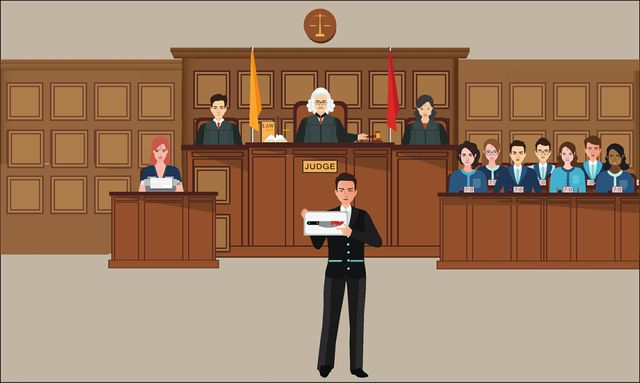
Odd evidence isn't a novelty act. Judges see it more often than people realize, and how they rule on a single strange exhibit can decide a whole case. So how does a courtroom go from raising an eyebrow at an exhibit to letting a jury weigh it?
Strange Exhibits Keep Showing Up in Court
Cat hair is only the start. Over the years, prosecutors and defense teams have carried exhibits into courtrooms that would sound absurd anywhere else.
• A junk-food diet. In the 1979 trial of Dan White for the killings of a San Francisco mayor and supervisor, defense witnesses testified that his consumption of Twinkies and other junk food was a symptom of depression. The jury returned voluntary manslaughter instead of murder, and the "Twinkie defense" entered the language.
• A Fitbit. Richard Dabate told police his wife was killed by an intruder. Her fitness tracker showed her moving around the house long after he said she was shot, and that mismatch helped anchor the state's case.
• A parrot, a tree, a tattoo. Courts have entertained testimony about a parrot repeating a victim's last words, botanical evidence from a palo verde tree that placed a truck at a crime scene, and gang tattoos offered as proof of motive.
Judges aren't chasing the bizarre. Modern life keeps producing new kinds of proof, and someone has to decide what a jury gets to see.
The Obvious Fix Is to Just Keep Weird Stuff Out
The intuitive answer is simple. If a piece of evidence sounds ridiculous, or the science behind it is new, keep it away from the jury. Let trials stick to fingerprints, eyewitnesses, and documents. Anything else risks confusing twelve people who didn't sign up to referee a scientific debate.
That instinct falls apart fast. A blanket ban on unusual evidence would have kept out the cat hair that solved a murder, the step counts that unraveled a staged home invasion, and the surveillance footage everyone now takes for granted. Every familiar category of proof was strange once. DNA was the newcomer forty years ago, and courts spent a decade fighting over whether juries could handle it.
The other problem is that the rules of evidence don't work the way that instinct suggests. The baseline under Rule 402 in federal court is that relevant evidence comes in unless a specific rule keeps it out. Weirdness isn't one of those rules. A judge who tosses evidence because it feels unusual is inviting a reversal on appeal.
What Judges Actually Do With the Odd Stuff
The real work happens through a series of filters that have almost nothing to do with how the evidence sounds and everything to do with whether it holds up.
1. Relevance first. The judge asks whether the item makes a fact in the case more or less likely. A parrot's phrase only matters if it ties to the crime; a tattoo only matters if it connects to motive or identity. If the link is missing, the exhibit is out.
2. Reliability of the method. When the evidence depends on expert analysis, federal judges apply the Daubert standard, weighing testing, peer review, error rates, and general acceptance. That's how animal DNA, digital forensics, and bite-mark analysis each got their day in court, and how some of them lost it.
3. Probative value versus prejudice. Even relevant, reliable evidence can be excluded if it would inflame a jury more than inform them. Graphic photos, prior bad acts, and shock exhibits get weighed here.
4. Foundation and chain of custody. Someone has to explain where the exhibit came from, how it was collected, and why it is what the offering party says it is. Fail that step and nothing else matters.
5. Appellate courts do the second pass. When Dabate challenged the Fitbit ruling, the Connecticut Supreme Court upheld its use and the conviction stood. The pattern holds: strange evidence gets in when the offering side can show it means something and can back up how it was produced.
Any of This Can Land on the Person Facing Charges
The takeaway from these cases isn't that courts are chasing gimmicks. Almost anything can become evidence, and the fight over what a jury sees is often where a case is won or lost. A skilled criminal defense attorney spends real time on motions to exclude, challenges to expert qualifications, and hearings over how a piece of digital or forensic evidence was collected. Those pretrial fights rarely make the news, but they shape the trial the jury watches.
If you ever end up on the wrong side of a criminal charge, the question isn't whether the evidence against you sounds strange. It's whether it's relevant, whether the method behind it is sound, and whether the state can prove the exhibit is what they claim. Those are the questions judges ask. They're the ones your lawyer should be asking first.