


The Impact of Cryptocurrency on Global Gambling Regulations
- Category: Pics |
- 28 Feb, 2024 |
- Views: 368 |

The advent of cryptocurrencies and blockchain technology has had wide-ranging impacts across finance, technology, and beyond. One industry undergoing major upheaval is online gambling. Some brands that realized the potential of cryptocurrency before anyone else, like Betboo, came out winners in this situation with many new players and users. As decentralized digital currencies gain traction globally, their pseudonymous nature opens new opportunities for regulatory arbitrage in gambling. Jurisdictions worldwide are being forced to update rigid gambling laws for an internet-native world.
Growth of Online Crypto Gambling
While exact metrics are unavailable, reports suggest the global cryptocurrency gambling industry has expanded rapidly. Some estimate over 50% of all Bitcoin transactions are now gambling-related as consumer comfort with internet commerce grows. Platforms have emerged allowing betting on sports, kasino nopea kotiutus games, esports and more with popular cryptocurrencies.
This growth is partly fueled by the aligning ethos between crypto and gambling - both leverage principles of transparency, decentralization, and individual financial freedom. Cryptocurrency users often value anonymity and privacy, traits complementary to online betting interests. The result is strong underlying consumer demand now being met at scale.
For regulators worldwide, cryptocurrencies crack open a cat-and-mouse dynamic. Vast gambling activity is conducted on blockchain platforms built intentionally to circumvent jurisdiction. Rules made for fiat money do not encapsulate this new paradigm. Laws rearrange; enforcement questions arise in this rapidly evolving landscape.
Key Crypto Impacts on Online Gambling Regulations
While regional nuances abound country-by-country, several universal crypto impacts on the gambling regulatory climate stand out:
• Increased Anonymity - Identity checks are central to gambling laws, especially around problem gambling and minor protection. Cryptocurrency’s pseudo-anonymous nature allows bettors to bypass identity verification measures like Know Your Customer (KYC) protocols at regulated casinos.
• Challenging Geo-blocking - Gambling platforms frequently employ geo-blocking technology to adhere to jurisdiction license rules regarding eligible customer locations. However, VPN connections allow crypto users to mask locations and access blocked sites.
• Circumventing Payment Blockades - Many gambling outfits struggle with reliable access to transfers and banking. Yet, by transacting on public blockchains, crypto gambling systems skirt many fiat payment blockades.
• Paving Paths to Legality - Blockchain’s inherent transparency also provides a pathway to compliance. Regulators recognize that appropriately implemented, distributed ledger technology has the potential to uphold regulatory standing through code.
• Jurisdictional Arbitrage in Action - Perhaps the most impactful capability provided by cryptocurrency gambling is regulatory arbitrage between jurisdictions with contrasting laws. By basing operations out of permissive regions while marketing into highly-regulated locales unlawfully, companies find exploitable legal gaps.
Worldwide Legislative Responses Vary
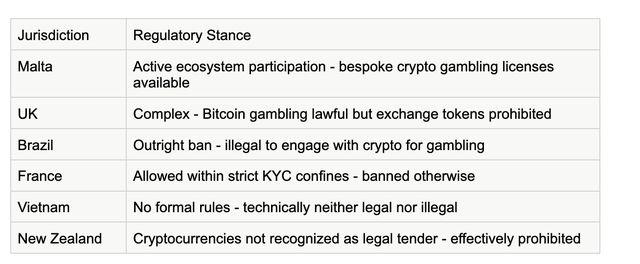
The diversity of responses highlights the legislative friction caused by attempting to stretch dated gambling rules over blockchain systems. And the gaps lead to growth opportunities for offshore operators.
Ongoing Evolution Expected
As cryptocurrencies cement themselves in the consumer financial fabric long-term, regulators worldwide will continue grappling with legislative evolution. Technological development far outpaces lawmaking causing inherent lags. The result is untamed crypto advancement and expansion into gambling happening quicker than oversight bodies can react.
While heavier-handed jurisdictions attempt outright bans on blockchain betting, they do so at the expense of personal liberties and financial privacy. More moderate regimes walk a line between allowing innovation while protecting vulnerable groups. But questions will remain on if regulations sufficiently deter unlawful operators.
Future debates in crypto gambling policy will examine finding balances around financial surveillance, problem gambling safeguards, age verification, geo-targeting, responsible gambling incentives and advertising. The frameworks constructed today lay the long-term legislative landscape for this embryonic industry.
One certainty is that blockchain-based betting coupled deeply with cryptocurrencies will continue penetrating gambling worldwide. These decentralized digital assets fundamentally shift power, transparency and trust structures between regulators, operators, and consumers alike across borders. The size and format of the industry by 2030 remains anyone’s guess. But the underlying social and technological trends propelling adoption show no signs of abating.