


Rafflesia (17 pics)
- Category: Pics |
- 8 May, 2009 |
- Views: 14101 |

 |
|
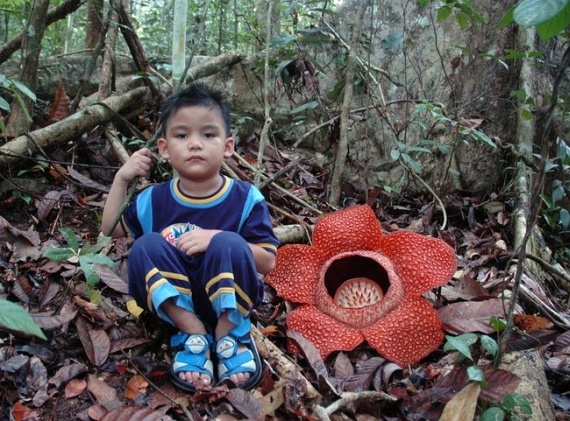
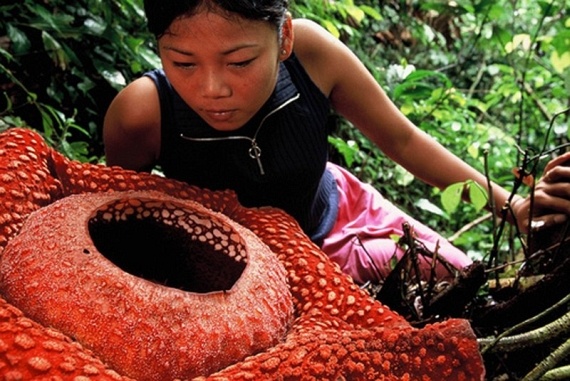
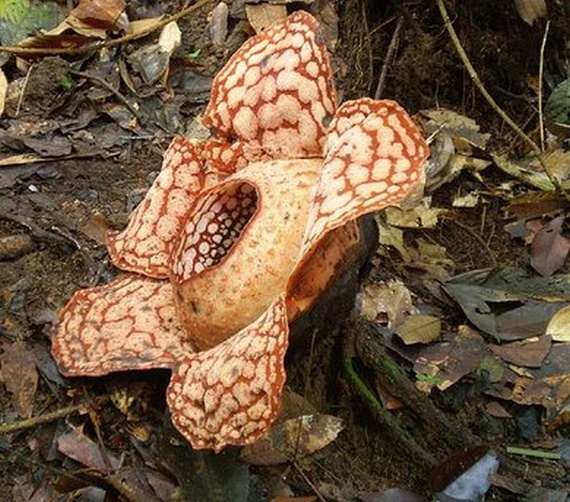
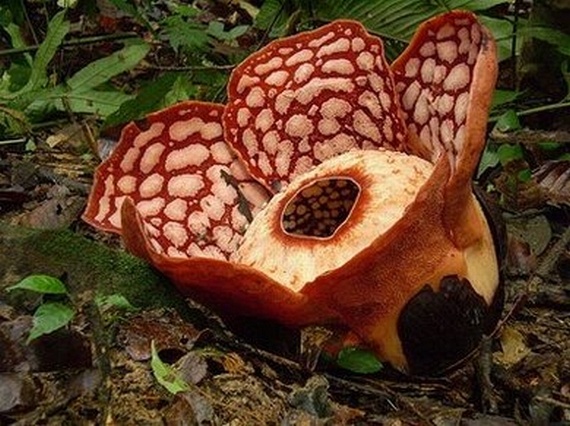
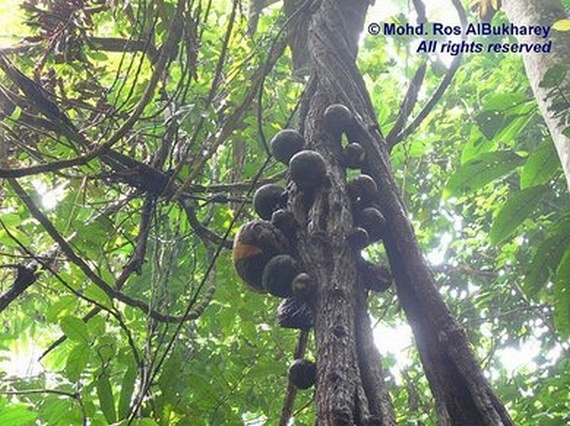
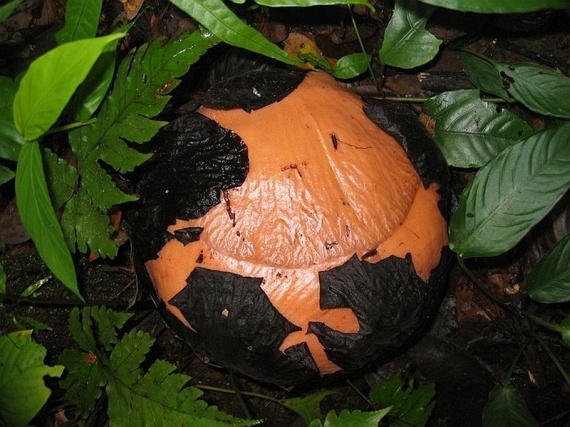
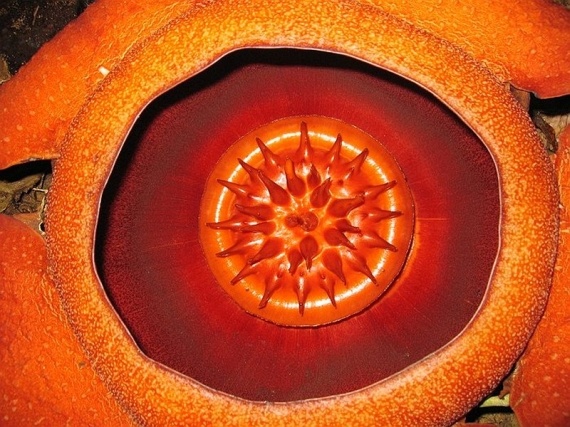
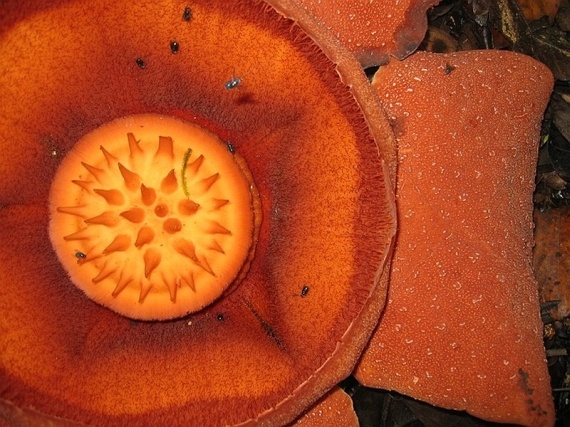
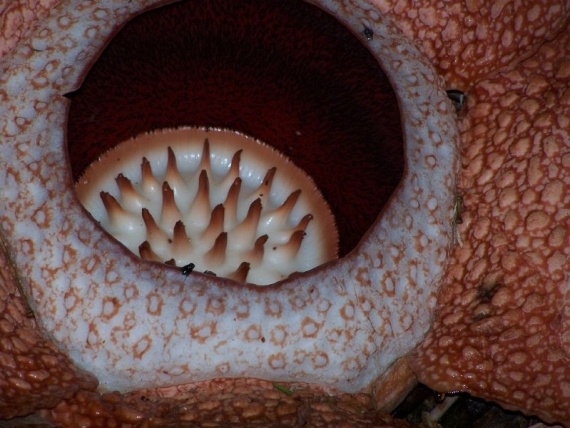
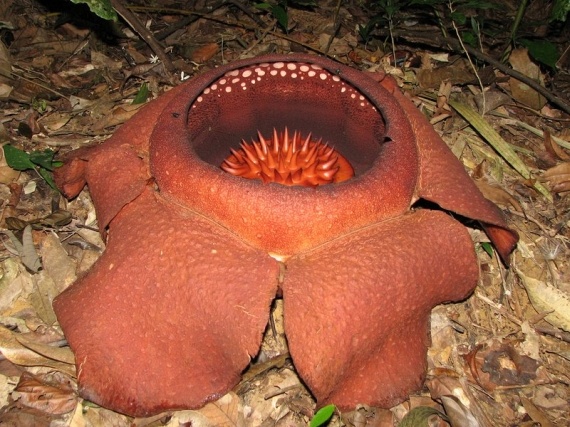
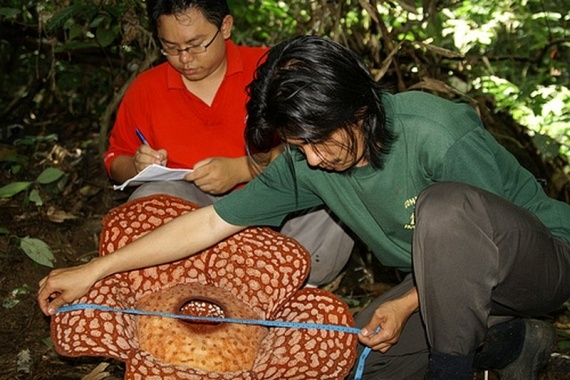
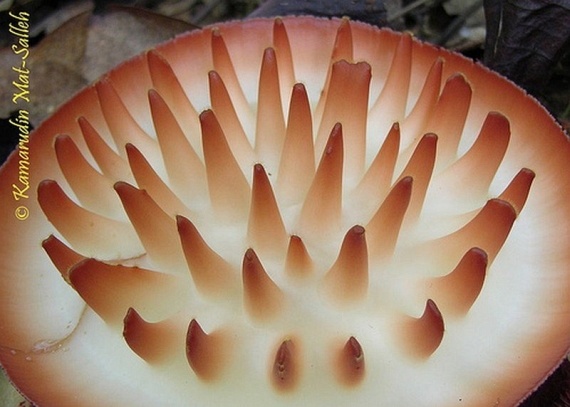
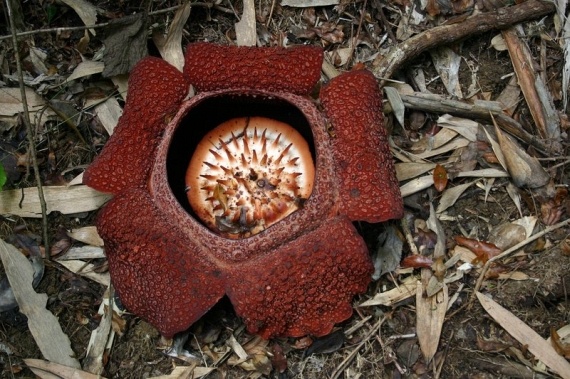
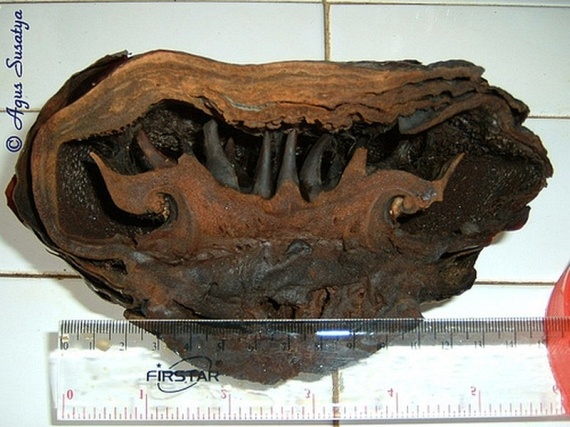
Rafflesia is a genus of parasitic flowering plants. It was discovered in the Indonesian rain forest by an Indonesian guide working for Dr. Joseph Arnold in 1818, and named after Sir Thomas Stamford Raffles, the leader of the expedition. It contains approximately 27 species (including four incompletely characterized species as recognized by Meijer 1997), all found in southeastern Asia, on the Malay Peninsula, Borneo, Sumatra, and the Philippines. The plant has no stems, leaves or true roots. It is an endoparasite of vines in the genus Tetrastigma (Vitaceae), spreading its root-like haustoria inside the tissue of the vine. The only part of the plant that can be seen outside the host vine is the five-petaled flower. In some species, such as Rafflesia arnoldii, the flower may be over 100 centimetres (39 in) in diameter, and weigh up to 10 kilograms (22 lb). Even the smallest species, R. manillana, has 20 cm diameter flowers. The flowers look and smell like rotting flesh, hence its local names which translate to "corpse flower" or "meat flower" (but see below). The vile smell that the flower gives off attracts insects such as flies and carrion beetles, which transport pollen from male to female flowers. Little is known about seed dispersal. However, tree shrews and other forest mammals apparently eat the fruits and disperse the seeds. Rafflesia is an official state flower of Indonesia, also Sabah state in Malaysia, as well as for the Surat Thani Province, Thailand.
The name "corpse flower" applied to Rafflesia is confusing because this common name also refers to the Titan Arum (Amorphophallus titanum) of the family Araceae. Moreover, because Amorphophallus has the world's largest unbranched inflorescence, it is sometimes mistakenly credited as having the world's largest flower. Both Rafflesia and Amorphophallus are flowering plants, but they are still distantly related. Rafflesia arnoldii has the largest single flower of any flowering plant, at least when one judges this by weight. Amorphophallus titanum has the largest unbranched inflorescence, while the Talipot palm (Corypha umbraculifera) forms the largest branched inflorescence, containing thousands of flowers; this plant is monocarpic, meaning that individuals die after flowering.
Text: wiki